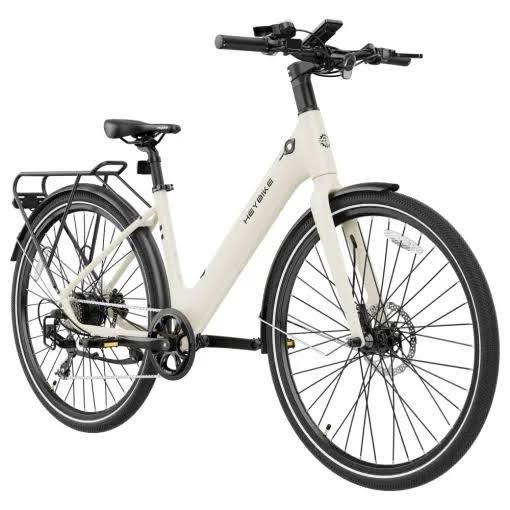
E-Bike Tax Credits and Rebates by State {2026}
E-Bike Tax Credits and Rebates by State {2026}
Introduction
E-bike incentive programs move fast — often faster than the articles written about them. A program that offered $1,200 off last year might be fully exhausted this year, a “coming soon” program might already be live, and a state that never had a rebate might just have launched one.
Here’s where things actually stand as of mid-2026: there is currently no active federal e-bike tax credit. A federal proposal — the E-BIKE Act — would create one, but it has not passed into law. Some retailers and blogs describe a federal credit as if it already exists; treat any claim like that with skepticism and confirm directly with the IRS or a tax professional before assuming you qualify for anything at the federal level.
State, city, and utility-level programs are where the real savings are right now — and they vary enormously depending on where you live.
Last updated: August 2026. Rebate programs change frequently — funding runs out, eligibility rules shift, and new programs launch throughout the year. Always confirm current details on the official program website before purchasing an e-bike based on an expected rebate.
The Federal E-Bike Tax Credit: Where It Actually Stands
Despite recurring buzz, there is no federal e-bike tax credit currently in effect. The proposed E-BIKE Act — which would offer a refundable credit for e-bike purchases — has been introduced in Congress in various forms but has not been signed into law.
If you’re seeing a retailer advertise a federal credit as a done deal, that’s a red flag. The safest approach: don’t factor a federal credit into your purchase decision unless the IRS has published official guidance confirming it, and keep your purchase receipt in case retroactive eligibility is ever established.
State-by-State Snapshot
Programs below reflect general status as of mid-2026. Because funding and eligibility change often, treat this as a starting point — not a guarantee — and confirm current details before you buy.
California
California’s statewide E-Bike Affordability Program, which offered vouchers for income-qualified residents, concluded its funded rounds and has not reopened a new statewide round as of 2026. Riders in California should look for city, county, and utility-level rebates instead, since several local programs remain active even without a statewide one currently funded. As of January 1, 2026, California also requires all e-bike batteries sold in the state to carry UL 2849 certification — worth confirming when comparing eligible models for any local rebate you do find.
Colorado
Colorado runs a statewide point-of-sale e-bike tax credit available through participating retailers. As of January 2026, the credit dropped to $225 per eligible purchase (down from a higher amount in prior years), with an additional bonus available for cargo e-bikes. Denver also runs its own separate city-level rebate program on top of the state credit, subject to its own funding rounds.
Washington
Washington’s WE-Bike program offers rebates to state residents, funded through the state’s Climate Commitment Act. The program uses a periodic application window, with awards distributed to a limited number of applicants rather than to everyone who applies — demand has significantly outpaced available funding in past rounds. Check current application windows before assuming the program is open.
Minnesota
Minnesota runs a statewide, income-based e-bike rebate program. Lower-income residents can qualify for a larger percentage off (up to roughly 75%, capped at a set dollar maximum), while other residents qualify for a smaller percentage off with a lower cap. Applicants generally need to be Minnesota residents and taxpayers above a minimum age.
Other States and Local Programs
Beyond the states above, incentive availability is inconsistent and often hyperlocal — some cities and utility companies offer their own rebates even in states with no statewide program, while some states with e-bike-friendly laws currently offer no financial incentive at all. Given how often this changes, the most reliable approach is to search “[your city] e-bike rebate” and “[your state] e-bike incentive” directly rather than relying solely on any single guide, including this one.
For More Information About E-Bikes, Please Click Below:
How to Find Out What’s Actually Available Where You Live
- Check your state’s official transportation or energy department website — these are more likely to be current than third-party blogs.
- Search for your city or county by name, since municipal programs often exist independently of state ones.
- Ask your utility provider. Some electric utilities run their own e-bike rebate programs, separate from state or city government.
- Check with the retailer. Point-of-sale rebate programs (like Colorado’s) are often applied automatically at checkout through participating bike shops — ask before you buy.
- Confirm eligibility requirements before purchasing, not after. Many programs require pre-approval or purchase from a participating retailer, and applying after the fact can disqualify you.
What to Watch For in Any Rebate Program
- Income requirements. A meaningful number of programs are tiered or restricted by household income — don’t assume a program applies to everyone in the state.
- Bike eligibility rules. Most programs require Class 1, 2, or 3 e-bikes with a motor under a specific wattage cap (commonly 750W) and UL-certified batteries. High-speed or modified bikes often don’t qualify.
- Funding limits. Many state and city programs operate on a first-come, first-served or lottery basis with limited annual funding — “active” doesn’t always mean “currently accepting applications.”
- Stacking rules. Some areas allow you to combine a state credit with a city or utility rebate; others don’t. Confirm whether programs can be stacked before assuming your total discount.
Frequently Asked Questions
Is there a federal tax credit for buying an e-bike in 2026? No. Despite ongoing proposals like the E-BIKE Act, no federal e-bike tax credit has been signed into law as of 2026. Don’t rely on one when budgeting for a purchase.
Which states currently have the strongest e-bike rebate programs? This shifts often, but Colorado’s statewide point-of-sale credit and Minnesota’s income-based rebate are among the more consistently available state-level programs as of 2026. California’s strongest incentives are currently at the city and utility level rather than statewide.
Do e-bike rebates apply automatically, or do I have to apply? It depends on the program. Some, like Colorado’s, apply automatically at checkout through participating retailers. Others, like Washington’s WE-Bike program, require an application and aren’t guaranteed even if you qualify, due to limited funding.
Can I combine a state rebate with a city or utility rebate? Sometimes, but not always — this depends entirely on the specific programs involved. Check the terms of each program directly rather than assuming they stack.
What happens if a rebate program runs out of funding? Most rebate programs are funded in limited rounds. Once funds are exhausted, the program typically closes until the next budget cycle or legislative session renews funding — check for reopening dates rather than assuming the program is gone permanently.
Final Takeaway
There’s no federal e-bike tax credit right now, and state-level support ranges from generous (Minnesota, Colorado) to currently nonexistent at the state level (California’s statewide program, for now). The programs that do exist change eligibility rules and funding levels often enough that any guide — including this one — should be treated as a starting point for your own research, not a final answer.
Before you buy, check your state’s official program page, your city’s website, and your utility provider — in that order — to find out what’s actually available to you right now.
This post reflects general program status as of August 2026 and is not tax or legal advice. Always verify current eligibility, funding status, and application requirements on official state, city, or utility websites before purchasing.
One thought on “E-Bike Tax Credits and Rebates by State {2026}”