How Much Does It Cost to Charge an E-Bike?
How Much Does It Cost to Charge an E-Bike?
If you’re eyeing an e-bike for your daily commute or weekend trail rides, you’ve probably already done the math on gas savings versus a car. But there’s one number that trips up almost every new rider: the actual cost to charge an e-bike.
The good news? It’s cheap. Ridiculously cheap, in most cases. But “cheap” isn’t a number you can budget with, so let’s break down exactly what you’ll pay, how that figure changes depending on where you live, and how to shrink it even further.
By the end of this guide, you’ll be able to calculate your own charging cost in under a minute — no electrical engineering degree required.
The Quick Answer
On average, charging an e-bike costs somewhere between $0.04 and $0.20 (USD) per full charge, depending on your battery size and local electricity rates. Over a full year of regular riding, most people spend less than $20-$30 total on electricity — often less than a single tank of gas.
That’s the short version. Now let’s look at where that number actually comes from, because “it depends” is only useful once you know what it depends on.
For More Information Please Click Below:
- Smart E-Bike vs Regular E-Bike: Which Is Better?
- Are Smart E-Bikes Worth the Money?
- How Smart E-Bikes Work In 2026
- Best Smart E-Bikes for City Commuting In 2026
What Determines the Cost to Charge an E-Bike?
Three things decide how much you’ll pay every time you plug in:
- Battery capacity (measured in watt-hours, or Wh)
- Charger efficiency (how much energy is lost as heat during charging)
- Your local electricity rate (measured in cost per kilowatt-hour, or kWh)
Once you know these three numbers, calculating your cost is simple arithmetic — no guesswork needed.
1. Battery Capacity (Watt-Hours)
Most e-bike batteries fall somewhere between 300Wh and 750Wh, though some cargo and long-range models go up to 1,000Wh or more. You’ll usually find this number printed directly on the battery or in the bike’s spec sheet.
Common examples include:
- Commuter e-bikes: 350–500Wh
- Mid-range city and hybrid e-bikes: 500–650Wh
- Cargo and long-range e-bikes: 700–1,000Wh+
A bigger battery means more range per charge, but it also means slightly more electricity used each time you top it up.
2. Charging Efficiency
No charger is perfectly efficient. Some energy is lost as heat while converting wall power into stored battery power. Most e-bike chargers operate at around 85–90% efficiency, meaning you’ll actually draw slightly more electricity from the wall than the battery’s rated capacity.
For example, a 500Wh battery might actually pull closer to 555–590Wh from your outlet during a full charge cycle.
3. Local Electricity Rates
This is the variable that changes the most depending on where you live. Electricity prices vary widely by country, state, and even by utility provider or time of day.
Here’s a rough global snapshot (rates fluctuate, so always check your latest utility bill for the most accurate number):
| Region | Approx. Cost per kWh (USD) |
|---|---|
| United States (national average) | $0.13–$0.17 |
| United Kingdom | $0.28–$0.34 |
| European Union (average) | $0.25–$0.35 |
| India | $0.07–$0.10 |
| Australia | $0.20–$0.28 |
| Canada | $0.10–$0.15 |
If your rate differs from these averages, that’s completely normal — just plug in your own number using the formula below.
The Formula: How to Calculate Your Own Charging Cost
Here’s the simple math anyone can do:
Battery capacity (kWh) × Electricity rate ($/kWh) = Cost per full charge
Since battery capacity is usually listed in watt-hours (Wh), divide by 1,000 first to convert it to kilowatt-hours (kWh).
Example Calculation
Let’s say you have a 500Wh battery and pay $0.15 per kWh.
- Step 1: Convert Wh to kWh → 500 ÷ 1,000 = 0.5 kWh
- Step 2: Multiply by your rate → 0.5 × $0.15 = $0.075 per full charge
Account for charging losses (roughly 10-15%), and your real-world cost lands around $0.08–$0.09 per charge.
That’s less than a dime to go anywhere from 20 to 50 miles, depending on your bike, terrain, and riding style.

Real-World Cost Examples by Battery Size
To make this even more concrete, here’s what charging costs look like across different battery sizes, using a mid-range U.S. electricity rate of $0.15/kWh.
| Battery Size | Full Charge Cost | Cost for 100 Charges |
|---|---|---|
| 300Wh | ~$0.05 | ~$5.00 |
| 400Wh | ~$0.06 | ~$6.00 |
| 500Wh | ~$0.08 | ~$8.00 |
| 625Wh | ~$0.10 | ~$10.00 |
| 750Wh | ~$0.12 | ~$12.00 |
| 1,000Wh | ~$0.16 | ~$16.00 |
Even riders who charge daily for an entire year are typically looking at $20–$50 annually in electricity — a fraction of what most people spend on coffee in a single month.
Cost to Charge an E-Bike vs. Other Transportation
Numbers make more sense with context. Here’s how e-bike charging stacks up against other everyday transportation costs.
- Car (gas): Roughly $0.10–$0.20 per mile depending on fuel prices and vehicle efficiency
- E-bike: Roughly $0.002–$0.005 per mile
- Public transit: Varies widely, but often $1.50–$3.00 per single ride
- E-bike charging (annual average): $20–$50 per year for regular riders
Even accounting for maintenance, tires, and the occasional part replacement, e-bikes remain one of the cheapest transportation options available today.
How Long Does It Take to Charge an E-Bike?
Cost and charging time go hand in hand, since you’re often paying for electricity over a multi-hour window. Most e-bike batteries take:
- 3–4 hours for a fast charger on a smaller battery (300–400Wh)
- 4–6 hours for standard chargers on mid-size batteries (500–650Wh)
- 6–8 hours for larger batteries (700Wh+) on standard chargers
Charging speed doesn’t significantly change total cost — you’re paying for total energy delivered (kWh), not time spent plugged in. A slow trickle charge and a fast charge to the same battery level cost roughly the same.
7 Practical Tips to Lower Your E-Bike Charging Costs
While the cost is already low, a few habits can shave it down even further — and extend your battery’s lifespan in the process.
- Avoid charging to 100% every single time. Charging to around 80-90% regularly, rather than a full 100%, reduces stress on lithium-ion cells and can extend battery lifespan by hundreds of cycles.
- Unplug once charging completes. Leaving a battery on the charger long after it’s full can waste a small amount of energy and generate unnecessary heat.
- Charge during off-peak hours. Many utility providers offer lower rates during nighttime or off-peak windows. Charging overnight can meaningfully reduce your electricity bill if your provider uses time-of-use pricing.
- Store your battery at room temperature. Extreme heat or cold reduces charging efficiency and can shorten battery life, indirectly costing you more in replacements down the line.
- Use the charger that came with your bike. Third-party or mismatched chargers can be less efficient — or in worse cases, damage the battery entirely.
- Keep your battery contacts clean. Dirt or corrosion on charging contacts can cause energy loss and slower charging.
- Consider a solar setup if you ride frequently. Riders who charge daily and have access to solar panels can bring their charging cost close to zero over time.
Does Battery Age Affect Charging Cost?
Yes, slightly. As lithium-ion batteries age, their internal resistance increases, which means chargers have to work a little harder — and less efficiently — to fill them up. This typically adds only a marginal amount to your electricity cost, but it’s worth knowing that a 3-year-old battery may cost a few cents more per charge than a brand-new one.
The bigger cost concern with aging batteries isn’t electricity — it’s eventual replacement, which is a separate expense from day-to-day charging.
Frequently Asked Questions
Is charging an e-bike cheaper than charging a phone? Per charge, no — phones use far less energy. But relative to the distance traveled, e-bikes are dramatically cheaper than almost any other form of powered transportation.
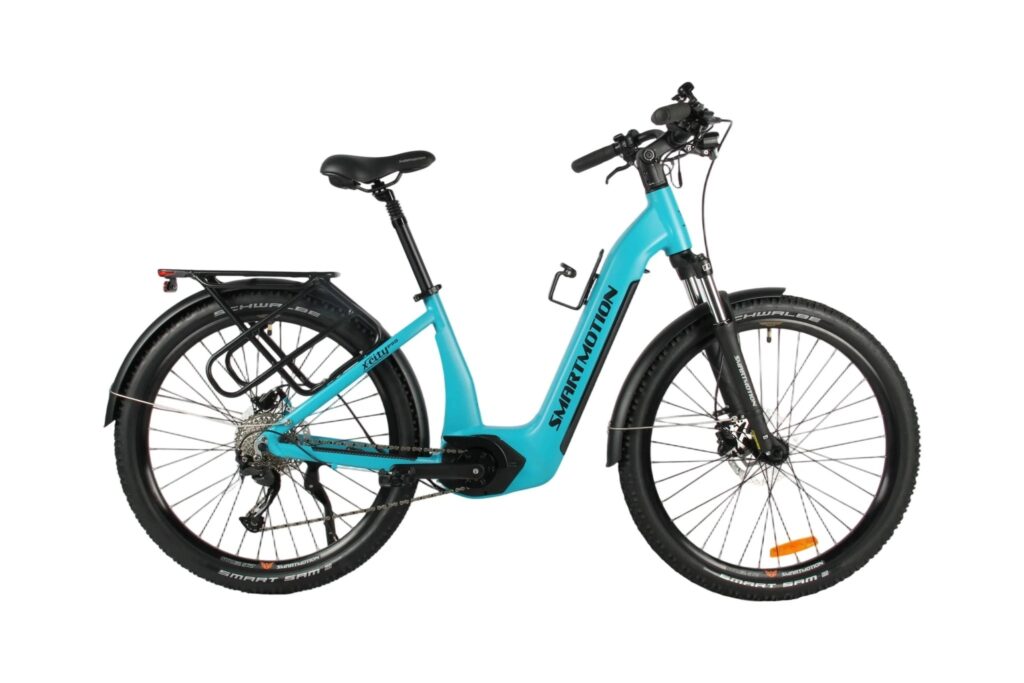
Can I charge my e-bike at a public EV charging station? Most e-bikes use a standard wall outlet charger, not the plug types used by electric vehicles, so public EV stations typically aren’t compatible unless the station also offers standard outlets.
Does cold weather increase charging costs? Cold temperatures can slightly reduce charging efficiency and battery performance, which may marginally increase the energy needed for a full charge. The difference is usually small but noticeable in winter months.
How many charge cycles does an e-bike battery typically last? Most quality lithium-ion e-bike batteries are rated for 500–1,000 full charge cycles before capacity noticeably declines, translating to several years of regular use for most riders.
Final Thoughts
The cost to charge an e-bike is one of the smallest ongoing expenses you’ll have as a rider — often just a few cents per charge and rarely more than $50 a year, even for daily commuters. Compared to fuel, parking, or public transit fares, it’s barely a rounding error in most people’s monthly budgets.
If you’re on the fence about switching to an e-bike, electricity cost shouldn’t be the thing holding you back. Grab your battery’s watt-hour rating, check your local electricity rate, and run the numbers yourself — you’ll likely be pleasantly surprised at just how little it costs to keep rolling.

One thought on “How Much Does It Cost to Charge an E-Bike?”