Women’s Electric Bikes: Top Picks & Buying Tips
Women’s Electric Bikes: Top Picks & Buying Tips
The best Women’s Electric Bikes aren’t necessarily bikes designed exclusively for women. In most cases, what matters more is finding the right combination of frame geometry, size, weight, riding position, motor assistance, and comfort for your body and riding style.
For many riders, a low step-through frame makes mounting and stopping easier. A lightweight design can be valuable if the bike needs to be carried upstairs. An upright riding position can make commuting more comfortable, while a torque-sensing motor can provide smoother assistance when starting from traffic lights or climbing hills.
In 2026, there are more choices than ever, from lightweight electric cruisers to full-power commuter bikes and compact models for shorter riders.
This guide covers the best electric bikes for women in 2026, how to choose the correct size, what makes an e-bike comfortable, and which features deserve your attention before buying.
What Makes a Good Electric Bike for Women?
There isn’t one specification that makes an e-bike suitable for women.
Instead, look at the overall fit.
A good women’s e-bike should ideally offer:
- Easy mounting and dismounting
- Appropriate frame size
- Comfortable reach to the handlebars
- A manageable overall weight
- Suitable motor assistance
- Comfortable saddle
- Reliable brakes
- Appropriate battery range
- Useful accessories
- Easy-to-use controls
A step-through frame can be especially convenient because the rider doesn’t have to lift a leg high over the rear wheel or top tube.
But don’t assume that every woman needs a step-through bike. A traditional diamond frame can be perfectly comfortable if the geometry and size fit the rider.
Fit should come before marketing labels.
Best Electric Bikes for Women 2026
The ideal model depends on how and where you ride. Rather than declaring one universal winner, the following options represent different priorities.
1. Specialized Turbo Como — Best for Comfort
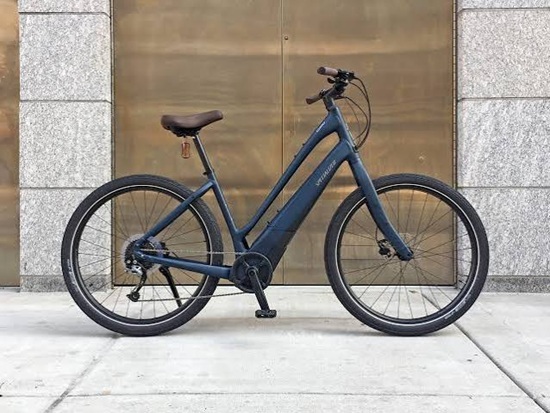
The Specialized Turbo Como is built around an upright, relaxed riding position and low step-through frame.
Specialized describes the Como as a city-oriented e-bike with a comfortable upright position, low step-through design, fenders, lights, and a suspension fork on the current Como 5.0 IGH.
The Como 5.0 IGH also uses an internal gear hub and belt-drive system, making it attractive for riders who want less traditional drivetrain maintenance.
Best for: Comfortable commuting, errands, city riding, and riders who prioritize easy mounting.
2. Specialized Turbo Como SL — Best Lightweight Option
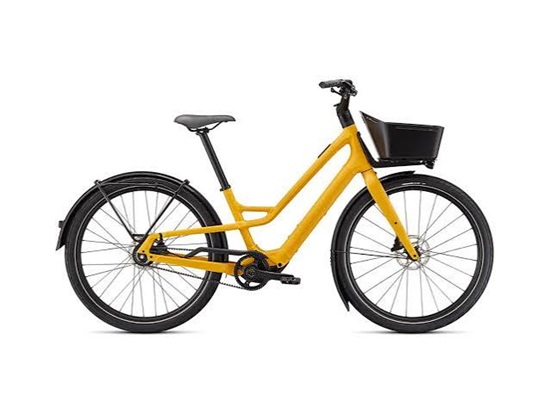
If you like the Como’s relaxed geometry but don’t want a particularly heavy bike, the Turbo Como SL deserves attention.
Specialized describes the Como SL as its lightweight electric cruiser, with an easy step-through frame, hydraulic disc brakes, belt drive, internal gearing, and a 320Wh integrated battery. The company lists a claimed range of up to 62 miles or 100 km in Eco mode, with an optional range extender increasing the stated maximum.
Its lighter design makes it particularly interesting for riders who regularly need to move or store their bike.
Best for: Riders looking for a lightweight e-bike for women without giving up a comfortable cruiser-style position.
3. Aventon Pace 4 Step-Through — Comfort-Oriented Commuter
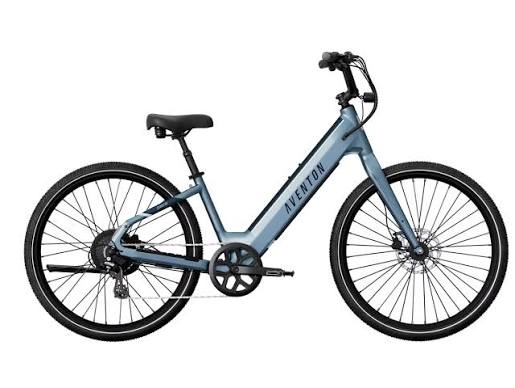
The Aventon Pace 4 Step-Through is another current low-entry option worth considering.
Independent 2026 testing coverage highlights its low step-through frame, upright cruiser geometry, torque sensor, and large 733Wh battery, with Aventon’s claimed range reaching up to 70 miles under its stated conditions.
A torque sensor can make assistance feel more proportional to how hard you pedal, which can be useful for riders who want a more natural cycling experience.
Best for: Everyday commuting, recreational riding, and riders who want substantial battery capacity.
4. Liv Amiti E+ — Women’s-Specific Geometry
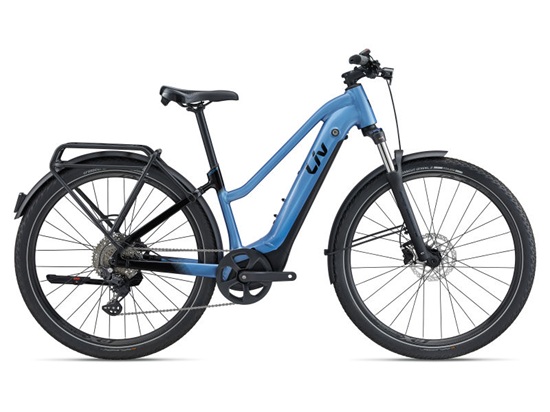
Liv, Giant’s women’s-focused cycling brand, is worth investigating if you specifically want a bicycle developed around women’s fit considerations.
Women’s-specific models can be useful for riders who find conventional unisex frame geometry doesn’t give them the right combination of reach, standover height, saddle position, and handlebar fit.
However, don’t assume a women’s-specific frame automatically fits better.
Always compare the manufacturer’s actual size chart with your measurements.
Best for: Riders who want a women’s-focused frame design rather than simply a unisex step-through bike.
5. Lectric XP4 Step-Thru — Folding and Practical
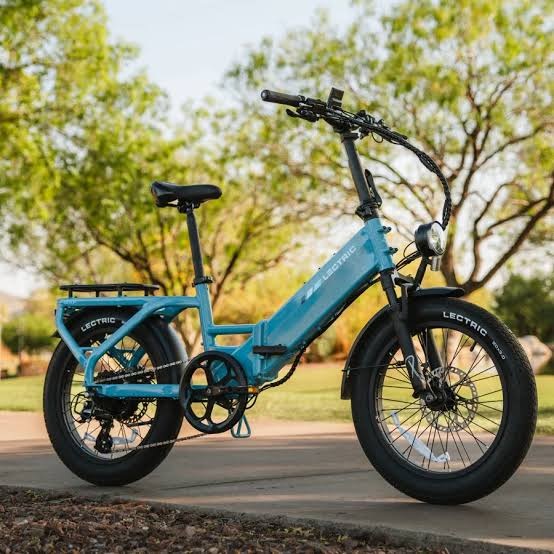
For riders who need portability, a folding step-through e-bike can be more useful than a conventional city bike.
The current Lectric XP4 appears in 2026 women’s e-bike testing coverage as a value-oriented folding option, particularly for riders who need easier storage and transportation.
The major advantage of this type of bike is flexibility: it can be folded for storage, transportation, or smaller living spaces.
The trade-off is that folding e-bikes can still be surprisingly heavy.
Best for: Apartment living, RV travel, car transport, and riders who need a compact storage solution.
Step-Through Electric Bike for Women
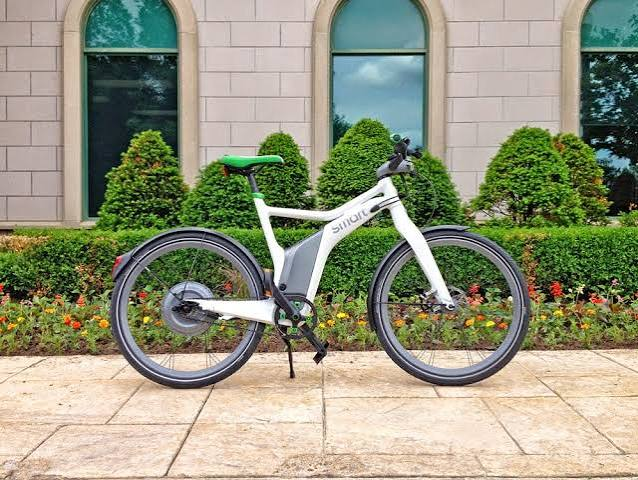
A step-through electric bike for women is one of the easiest configurations to live with.
Instead of stepping over a high top tube, you can step through the open center of the frame.
Advantages include:
- Easier mounting
- Easier dismounting
- Convenient at traffic lights
- Comfortable with everyday clothing
- Useful when carrying groceries
- Helpful for riders who dislike high top tubes
This design isn’t exclusively for women. Men, older riders, commuters, and anyone who prefers easy access can benefit from it.
Specialized’s Como is a good example of how a low step-through frame can be combined with an upright position and practical city equipment.
Women’s Electric Bike Sizing Guide
Getting the size right is arguably more important than choosing between two similar motors.
A bike that’s too large can feel difficult to control, particularly when stopping or maneuvering at low speed.
A bike that’s too small can feel cramped and inefficient.
Measure Your Height
Start with your height, but don’t stop there.
Manufacturers typically provide recommended height ranges for each frame size.
Measure Your Inseam
Your inseam is particularly useful when choosing a step-through or low-entry bike.
Stand barefoot with your feet slightly apart and measure from the floor to your crotch.
Compare that measurement with the manufacturer’s geometry information.
Check Reach
Sit on the bike and check whether you can comfortably reach:
- Brake levers
- Display
- Gear controls
- Bell
- Throttle, where legally fitted
You shouldn’t have to stretch your shoulders forward to reach the handlebars.
Electric Bike for Short Riders
Finding an electric bike for short riders requires more than choosing the smallest frame available.
Pay attention to:
- Standover height
- Seat height
- Reach
- Handlebar height
- Crank length
- Wheel size
- Frame weight
A low step-through frame can make a major difference because the rider doesn’t have to clear a high top tube.
For petite riders, smaller wheels can sometimes make the bike feel easier to control, although wheel size should be considered alongside frame geometry.
Don’t rely only on the listed height range
Two bikes can both claim to fit someone around 5 feet tall while feeling completely different.
That’s why a test ride is so valuable.
Best E-Bike for Petite Riders
The best e-bike for petite riders should have a frame that allows comfortable contact with the ground when stopping and doesn’t force excessive reach.
Before buying, check whether you can:
- Sit comfortably with the saddle adjusted correctly.
- Place your feet securely when stopping.
- Reach both brake levers naturally.
- Turn the handlebars without stretching.
- Start the bike confidently.
- Lift or maneuver it when parked.
A bike that technically fits your height isn’t necessarily a bike that feels comfortable.
Lightweight E-Bike for Women
Weight is one of the most overlooked specifications.
A 20 kg e-bike and a 30 kg e-bike may both be easy to ride once moving, but they’re very different when you need to:
- Carry them upstairs
- Load them onto a rack
- Move them through an apartment
- Lift the rear wheel
- Store them in a tight space
If you live upstairs or frequently transport the bike, prioritize weight.
The Specialized Turbo Como SL is an example of a comfort-oriented model that specifically emphasizes lightweight construction.
But don’t sacrifice everything for low weight
A lighter bike may have:
- A smaller battery
- Lower motor output
- Fewer accessories
- Less suspension
- Smaller tires
Think about total practicality, not weight alone.
Comfortable Electric Bike for Women
Comfort comes from several components working together.
Upright Riding Position
An upright position can reduce the amount of body weight placed on your hands and may feel more natural for casual riding.
Saddle
Don’t assume a wide saddle is automatically more comfortable.
The correct saddle depends on your anatomy, riding position, and sit-bone width.
Tires
Larger-volume tires can absorb small bumps and imperfections in the road.
Suspension
A suspension fork or suspension seatpost can help on rough streets, although it adds weight and complexity.
The current Turbo Como 5.0 IGH, for example, combines an upright position with an 80 mm suspension fork, higher-volume tires, and a suspension seatpost.
Women’s Commuter E-Bike: What Should You Look For?
A women’s commuter e-bike should be practical before it is fashionable.
For daily commuting, prioritize:
- Reliable brakes
- Integrated lights
- Fenders
- Rear rack compatibility
- Comfortable geometry
- Good battery range
- Puncture-resistant tires
- Secure battery mounting
- Weather-resistant components
A belt-drive bike can also be attractive if you want lower routine drivetrain maintenance.
For example, Specialized’s Como SL combines a Gates belt drive with an internal gear hub and integrated racks/fenders on its current configuration.
Stylish Electric Bikes for Women
There’s no reason an e-bike has to look like a bulky utility vehicle.
Many modern electric bikes integrate the battery into the frame, hide cables, and use clean frame lines.
When looking for stylish electric bikes for women, consider:
- Integrated battery
- Internal cable routing
- Clean frame design
- Matching accessories
- Minimalist display
- Neutral or personalized colors
- Integrated lighting
But don’t choose appearance over fit.
A beautiful bike that is uncomfortable will spend more time in your garage than on the road.
Motor Choice: Hub vs Mid-Drive
The motor location influences how an e-bike feels.
Hub Motor
A hub motor sits inside the front or rear wheel.
Advantages
- Simple design
- Often less expensive
- Easy to understand
- Good for flat-city riding
Disadvantages
- Can feel less natural with basic cadence sensors
- Adds weight to the wheel
- Rear-wheel servicing can be more complicated
Mid-Drive Motor
A mid-drive motor sits around the crank area.
Advantages
- Centralized weight
- Excellent hill performance
- Natural interaction with the bicycle’s gears
- Efficient climbing on many systems
Disadvantages
- Usually more expensive
- More drivetrain wear
- More complex servicing
For city riding, either system can work well. For steep terrain, a good mid-drive can be particularly attractive.
Torque Sensor vs Cadence Sensor
This is another important decision.
Cadence Sensor
The motor generally activates when it detects that the pedals are turning.
Pros:
- Affordable
- Simple
- Easy for relaxed riding
Cons:
- Assistance can feel more like an on/off system
- Less responsive to how hard you pedal
Torque Sensor
The system measures how much force you’re applying to the pedals.
Pros:
- More natural response
- Better control
- Smooth starts
- Good for active riders
Cons:
- Usually more expensive
- You still need to pedal to receive proportional assistance
For riders who want an e-bike to feel more like a bicycle with an electric boost, a torque sensor is often worth considering.
Women’s Electric Bike Accessories
The right accessories can make an ordinary e-bike much more useful.
Essential Accessories
Consider:
- Quality helmet
- Front and rear lights
- Rear rack
- Panniers
- Lock
- Phone mount
- Bell or horn
- Fenders
- Water bottle
- Mini pump
- Repair kit
For commuters
A rear rack and panniers are often more useful than a backpack.
For recreational riders
A comfortable handlebar bag or front basket may be sufficient.
For security
Invest in a quality lock and use the bike’s built-in security features where available.
Some modern e-bikes also include electronic anti-theft functions. Specialized’s current Como 5.0 IGH, for example, includes motor-lock functionality and a removable/lockable battery system. (specialized.com)
How Much Should You Spend?
Women’s electric bikes are available across a huge price range.
Budget: Under $1,500
Look for:
- Basic commuter bikes
- Simple hub motors
- Mechanical or entry-level hydraulic brakes
- Smaller batteries
- Fewer premium components
Mid-range: $1,500–$3,000
You can often find:
- Better motors
- Larger batteries
- Torque sensors
- Better brakes
- Integrated lighting
- Higher-quality frames
Premium: $3,000+
Expect:
- Sophisticated motor systems
- Lightweight construction
- Better suspension
- Premium drivetrains
- Integrated technology
- Higher-quality components
Don’t assume a more expensive bike is automatically better for your needs.
How to Test Ride a Women’s Electric Bike
Before purchasing, spend at least 10–15 minutes riding if possible.
Test:
Starting
Can you comfortably start without feeling unstable?
Stopping
Can you put a foot down easily?
Turning
Does the bike feel predictable at low speed?
Braking
Can you comfortably reach and operate both brake levers?
Hills
Does the motor provide enough assistance?
Handling
Does the bike feel too heavy or awkward?
Comfort
After several minutes, check your hands, back, shoulders, and hips.
If something feels uncomfortable during a short test ride, it probably won’t become more comfortable after months of ownership.
Common Mistakes Women Make When Buying an E-Bike
These mistakes aren’t unique to women, but they’re especially relevant when comparing bikes marketed toward female riders.
Choosing based on appearance
A stylish frame can’t compensate for poor fit.
Ignoring weight
Remember that you’ll eventually have to move the bike without motor assistance.
Buying too much power
A huge motor isn’t necessary for every commute.
Ignoring battery replacement
Ask how much a replacement battery costs before buying.
Selecting the wrong size
Don’t rely solely on S/M/L labels.
Forgetting accessories
Budget for a lock, helmet, lights, rack, and other essentials.
Ignoring local laws
E-bike speed and power limits differ by country and region.
Women’s Electric Bike Buying Checklist
Before you buy, ask yourself:
- Does the frame fit my height?
- Is the reach comfortable?
- Can I easily mount and dismount?
- Is the bike light enough for my storage situation?
- Does the motor suit my terrain?
- Is the battery large enough for my typical ride?
- Does it have reliable brakes?
- Are replacement parts available?
- Can I get local servicing?
- Are the accessories I need compatible?
- Does the bike comply with local e-bike regulations?
- Have I taken a proper test ride?
If you can answer these questions confidently, you’re much more likely to end up with an e-bike you’ll actually enjoy riding.
Final Thoughts on Women’s Electric Bikes
The market for Women’s Electric Bikes has changed considerably. Today, women don’t have to choose between a heavy utility bike and a conventional bicycle with an aftermarket motor.
There are lightweight cruisers, low-step commuters, folding models, women’s-specific designs, premium mid-drive bikes, and high-capacity city e-bikes.
For maximum comfort, a low step-through frame and upright riding position can be excellent choices. For riders who frequently carry or store their bike, weight deserves extra attention. Petite riders should focus on reach, standover height, and overall geometry rather than simply choosing the smallest frame.
And if commuting is your priority, features such as lights, fenders, racks, reliable brakes, and adequate battery capacity may be more valuable than an extremely powerful motor.
The most important lesson is simple:
Don’t buy an e-bike because it is marketed specifically to women. Buy one because its size, geometry, weight, motor, battery, and features fit you.
When those factors come together, an electric bike can turn everyday commuting, shopping, exercise, and weekend rides into something considerably easier—and much more enjoyable.