Belt Drive vs Chain Drive: Which Is Better?
Belt Drive vs Chain Drive: Which Is Better?
Choosing between belt drive vs chain drive can seem like a small technical decision, but the drivetrain you choose can dramatically affect noise, maintenance, durability, performance, and long-term ownership costs.
The comparison becomes especially interesting when you’re shopping for an e-bike, bicycle, or garage door opener. A chain has been the traditional choice for decades because it is strong, affordable, and easy to replace. A belt, however, offers a cleaner and quieter alternative with fewer routine maintenance requirements.
But does that automatically make a belt better?
Not necessarily.
The right choice depends on what you’re powering, how frequently you use it, your environment, and what matters most to you. In this guide, we’ll compare belt drive vs chain drive for bicycles and garage door openers, explain the advantages and disadvantages of each, and help you decide which system makes the most sense.
Belt Drive vs Chain Drive at a Glance
Here’s a quick comparison before we explore the details:
| Feature | Belt Drive | Chain Drive |
|---|---|---|
| Noise | Very quiet | Louder |
| Lubrication | Usually not required | Required |
| Cleanliness | Very clean | Can attract oil and dirt |
| Rust resistance | Excellent | Requires protection from corrosion |
| Weight | Often lightweight | Usually heavier |
| Durability | Excellent with proper alignment | Excellent and well proven |
| Maintenance | Low | Moderate |
| Repairability | More specialized | Easy to find parts and repair |
| Cost | Usually higher | Usually lower |
| Gear compatibility | Requires compatible components | Extremely versatile |
| Best for | Quiet, low-maintenance riding | Performance, versatility, affordability |
The biggest difference is simple: a chain uses metal links and sprockets, while a belt uses a flexible toothed belt and matching pulleys.
That basic difference affects almost everything else.
What Is a Belt Drive?
A belt drive transfers power using a flexible belt rather than a metal chain.
For bicycles, modern belt systems commonly use reinforced materials designed to withstand repeated loads. One well-known example is Gates Carbon Drive, which uses carbon reinforcement and is designed specifically for bicycle applications. Gates describes its bicycle belt systems as clean, grease-free, rust-free, and suitable for applications ranging from urban commuting to e-bikes and mountain bikes.
Instead of traditional chain links, the belt has teeth that engage with matching sprockets.
This creates a smooth and relatively quiet power-transfer system.
Main Advantages of Belt Drive
- Quiet operation
- No chain oil
- Minimal routine cleaning
- Excellent resistance to rust
- Clean operation around clothing
- Low maintenance
- Smooth power delivery
- Long service life when properly installed
A belt drive is particularly attractive to commuters who don’t want to clean and lubricate their drivetrain regularly.
What Is a Chain Drive?
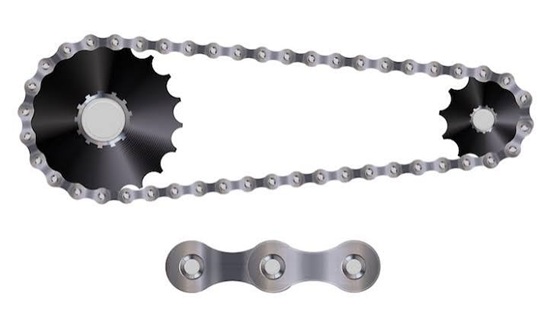
A chain drive transfers power using interlocking metal links that engage with toothed sprockets.
This is the traditional bicycle drivetrain and remains extremely popular because it is inexpensive, efficient, versatile, and easy to service.
Chains are also compatible with a huge variety of bicycle components. Whether you’re riding a basic commuter bike, road bike, mountain bike, cargo bike, or high-performance e-bike, replacement chains and drivetrain components are widely available.
Main Advantages of Chain Drive
- Affordable
- Easy to repair
- Widely available replacement parts
- Compatible with many gearing systems
- Excellent power-transfer capability
- Well understood by bicycle mechanics
- Suitable for high-performance applications
The downside is maintenance.
A bicycle chain needs appropriate lubrication and should be kept reasonably clean. Dirt, moisture, and poor lubrication can accelerate wear.
Belt Drive vs Chain Drive for Bikes
The belt drive vs chain drive bike debate is particularly relevant to commuters and e-bike owners.
For a traditional bicycle, both systems can work extremely well. The difference is more about ownership experience than whether one system simply “works” and the other doesn’t.
A chain offers maximum flexibility.
A belt offers maximum cleanliness and convenience.
If you ride through rain, commute daily, or store your bicycle indoors, the clean nature of a belt drive can be particularly appealing.
Belt Drive Bike Pros and Cons
Pros of Belt Drive Bikes
1. Very low maintenance
One of the biggest advantages is that you don’t need conventional chain lubricant.
That means less cleaning, fewer greasy components, and less drivetrain mess.
2. Quiet operation
A properly installed belt drive is exceptionally quiet compared with many traditional chain systems.
This is especially useful for city commuters who prefer a smooth, almost silent riding experience.
3. No rust
Unlike a steel bicycle chain, a belt doesn’t rust in the same way.
This can be valuable for riders who regularly encounter rain, humidity, or road moisture.
4. Clean
A belt doesn’t require oil-based chain lubricant, making it less likely to stain clothing or transfer grime to your hands.
5. Long service life
A quality belt system can provide long service life when correctly aligned and tensioned.
Gates specifically markets its Carbon Drive systems around long-life, low-maintenance operation.
Cons of Belt Drive Bikes
There are also some limitations.
- Higher initial cost
- Requires compatible frame and drivetrain
- Cannot usually be repaired like a broken chain
- Requires correct belt tension
- Misalignment can cause problems
- Replacement belts may be less widely available
- Not every bicycle frame supports belt installation
These limitations are important.
A belt isn’t simply a chain that you can swap onto any bicycle.
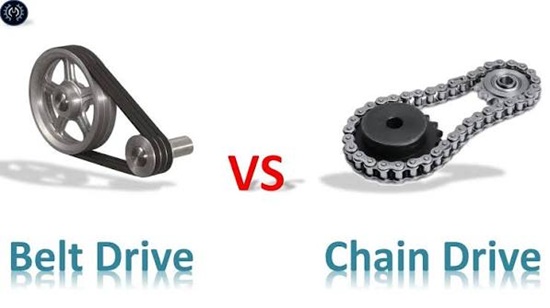
Chain Drive vs Belt Drive Bike
For many cyclists, the chain drive vs belt drive bike decision comes down to flexibility versus convenience.
Choose a Chain Drive If:
- You want the lowest purchase cost.
- You frequently change gears.
- You want easy access to replacement parts.
- You ride competitively.
- You want maximum drivetrain compatibility.
- You regularly service your own bicycle.
Choose a Belt Drive If:
- You want minimal maintenance.
- You hate greasy chains.
- You commute daily.
- You ride in wet conditions.
- You want a quiet drivetrain.
- You value cleanliness and convenience.
- You are willing to pay more upfront.
For many urban commuters, a belt-driven bike paired with an internally geared hub or compatible drivetrain can be an excellent low-maintenance setup.
Belt Drive E-Bike Maintenance
One misconception is that a belt drive requires zero maintenance.
That’s not quite true.
The belt itself requires considerably less routine attention than a lubricated chain, but the complete drivetrain still needs periodic inspection.
Basic Belt Drive E-Bike Maintenance
- Check belt tension regularly.
- Inspect the belt for visible damage.
- Keep the belt and sprockets reasonably clean.
- Check pulley alignment.
- Inspect mounting hardware.
- Follow the manufacturer’s recommended service intervals.
Avoid treating a belt like a chain.
You generally should not apply conventional chain lubricant to a bicycle belt. Gates promotes its belt systems as grease-free and designed to operate without traditional chain lubrication.
Why Belt Tension Matters
A belt that is too loose can skip or behave poorly.
A belt that is excessively tight can place unnecessary loads on components.
Correct tension and alignment are therefore essential.
This is one reason professional setup can be worthwhile when purchasing a belt-drive e-bike.
What Are Belt Driven Bicycle Problems?
Although belt drives are highly convenient, they aren’t completely problem-free.
Common belt-driven bicycle problems can include:
1. Incorrect Tension
Incorrect tension can affect performance and cause the belt to skip or make unusual noises.
2. Misalignment
The belt and sprockets need to remain properly aligned.
Poor alignment can increase wear and create operating problems.
3. Frame Compatibility
Many belt systems require a frame that allows the continuous belt to be installed because a belt cannot simply be opened like a bicycle chain.
4. Limited Emergency Availability
If you break a chain during a trip, finding a replacement can be relatively easy.
A compatible bicycle belt may be harder to find locally.
5. Higher Replacement Cost
A quality belt and its compatible sprockets can cost more than a basic chain.
These drawbacks don’t make belts a bad choice. They simply mean you should consider your riding environment before buying one.
Belt Drive vs Chain Drive Garage Door Opener
The phrase belt drive vs chain drive garage door opener refers to a different application from bicycles, but the fundamental idea is similar.
A garage door opener uses a drive system to move the trolley along a rail and open or close the door.
A belt-drive opener uses a belt, while a chain-drive opener uses a heavy-duty chain.
According to Chamberlain, belt-drive garage door openers use steel-reinforced rubber belts and are designed for ultra-quiet, smooth operation. Chain-drive openers use heavy-duty chains and are positioned as durable and budget-friendly options.
Belt vs Chain Drive Garage Door Opener: Noise
Noise is one of the biggest reasons homeowners choose belt drive.
A chain drive can produce noticeable mechanical noise and vibration as the chain moves along its rail.
A belt drive generally operates more quietly and smoothly.
This matters particularly when:
- The garage is attached to the house.
- A bedroom is above the garage.
- Living space shares a wall with the garage.
- You use the garage frequently at night.
- You prefer a quieter home environment.
LiftMaster specifically highlights belt-drive systems for reducing noise and vibration and describes them as suitable for homes with living spaces next to or above the garage.
Is a Belt Garage Door Opener Completely Silent?
No.
Calling a belt-drive opener “silent” would be misleading.
The motor, rollers, hinges, springs, and door itself can still make noise.
The belt drive mainly reduces noise and vibration from the opener’s drive mechanism.
Chain Drive vs Belt Drive Garage Door Opener: Cost
Price is another important difference.
In general, chain-drive garage door openers tend to be more budget-friendly, while belt-drive models often command a premium.
Chamberlain describes chain-drive systems as budget-friendly and belt-drive systems as ultra-quiet and smooth.
For a detached garage, the additional cost of a belt drive may not be worthwhile if noise isn’t a concern.
For an attached garage with a bedroom directly above it, spending more for quieter operation may make much more sense.
Belt Drive vs Chain Drive Garage Door Openers: Durability
Both systems can provide reliable service when correctly installed and maintained.
A chain has the advantage of being a familiar, robust mechanical system.
A belt has the advantage of quieter operation and fewer concerns about conventional chain lubrication.
LiftMaster describes its chain-drive systems as durable and dependable, while its belt-drive systems emphasize smooth and quiet operation.
The quality of the opener matters just as much as the drive type.
Don’t assume that every belt-drive opener is automatically better than every chain-drive model.
For More Information About Smart E-Bikes Please Click Below:
- Electric Cargo Bikes 101: What They Are and Whether You Need
- E-Bike Tax Credits and Rebates by State {2026}
- E-Bikes for Seniors: Safety Features and What Actually Matters?
- Electric Bike
Belt Drive vs Chain Drive: Which Garage Door Opener Should You Buy?
Choose a Belt Drive Garage Door Opener If:
- Quiet operation is important.
- Your garage is attached to your home.
- There is a bedroom above the garage.
- You use the garage frequently.
- You want smooth operation.
- You’re comfortable paying more for reduced noise.
Choose a Chain Drive Garage Door Opener If:
- Price is a priority.
- The garage is detached.
- Noise isn’t a major concern.
- You want a proven, durable drive system.
- You want a practical opener without paying extra for quiet operation.
Modern garage door openers can also include features such as Wi-Fi control, battery backup, soft start/stop, lighting, and security technology, so the drive type shouldn’t be your only purchasing criterion. Chamberlain, for example, currently offers both belt- and chain-drive openers with smart-home features depending on the model.
Belt Drive vs Chain Drive: Performance Comparison
Let’s simplify the decision across the most important categories.
| Category | Winner | Why |
| Quiet operation | Belt | Produces less mechanical noise |
| Low maintenance | Belt | No conventional chain lubrication |
| Purchase price | Chain | Generally less expensive |
| Availability | Chain | Replacement parts are widely available |
| Cleanliness | Belt | No oily chain |
| Versatility | Chain | Supports many drivetrain configurations |
| Wet-weather resistance | Belt | Doesn’t rust like a steel chain |
| Easy roadside repair | Chain | Simple to replace or repair |
| Smoothness | Belt | Very smooth operation |
| Long-term practicality | Depends | Application matters |
There is no universal winner.
The best option depends on what you value most.
Belt Drive vs Chain Drive: Which Is Better for E-Bikes?
For e-bikes, the decision becomes even more interesting because electric motors can place additional loads on the drivetrain.
A belt drive can be particularly attractive for commuter e-bikes because it reduces routine cleaning and lubrication.
However, the e-bike must be designed around the belt system. You cannot simply replace any e-bike chain with a belt.
For high-performance e-bikes, mountain bikes, and applications requiring sophisticated derailleur gearing, chains remain extremely common because of their flexibility and compatibility.
For urban commuter e-bikes, especially those using internally geared hubs or other compatible systems, belts can offer a very clean ownership experience.
Expert Tips Before Choosing a Drive System
Before purchasing, ask yourself these questions:
1. Where Will You Ride?
Rainy, dirty urban environments may favor a belt.
Dry environments may make the difference less important.
2. How Much Maintenance Do You Want?
If you enjoy mechanical maintenance, a chain may not bother you.
If you want to ride without regularly cleaning and lubricating the drivetrain, a belt has a clear advantage.
3. Is Noise Important?
For bicycles, belts are quieter.
For garage door openers, belt drives are particularly attractive when the garage is close to living spaces.
4. What Is Your Budget?
A chain generally gives you more drivetrain options at a lower initial price.
A belt usually requires a larger upfront investment.
5. What Happens If Something Breaks?
Consider parts availability in your area.
This is particularly important for long-distance touring and e-bike travel.
Final Verdict: Belt Drive vs Chain Drive
So, belt drive vs chain drive — which is better?
The answer depends on your priorities.
For bicycles and e-bikes, belt drives are excellent for commuters who value cleanliness, quiet operation, and low maintenance. A system such as Gates Carbon Drive can be particularly appealing for riders who want to avoid conventional chain lubrication and corrosion concerns.
Chains remain the better all-round choice for riders who want affordability, easy repairs, broad component compatibility, and maximum drivetrain flexibility.
For garage door openers, belt drives are usually the better choice when quiet and smooth operation is important, especially in attached garages. Chain drives are a sensible option when budget and straightforward durability matter more. Chamberlain and LiftMaster both distinguish their belt systems primarily by quiet operation and their chain systems by durability and value.
Quick Recommendation
Choose belt drive if you want:
- Quiet operation
- Low routine maintenance
- Clean operation
- Excellent corrosion resistance
- A smoother ownership experience
Choose chain drive if you want:
- Lower upfront cost
- Easy repairs
- Widely available parts
- Maximum drivetrain flexibility
- A proven and versatile system
Ultimately, the best drive system isn’t the one with the longest list of advantages. It’s the one that fits your budget, environment, maintenance preferences, and intended use.
For a city commuter or quiet attached garage, belt drive can be worth paying extra for. For a performance-focused cyclist, budget buyer, or homeowner prioritizing value, chain drive can still be the smarter choice.