Fastest Charging E-Bikes: 0–80% In 1 Hour
Fastest Charging E-Bikes: 0–80% in 1 Hour
When an e-bike takes four to six hours to recharge, charging can feel like a chore. But the newest fastest-charging e-bikes are changing that equation. Some modern systems can replenish a large battery to 80% in roughly an hour, making a quick lunch break or mid-ride stop genuinely useful.
The important catch is that “fast charging” doesn’t mean every e-bike can go from empty to full in 60 minutes. Charging speed depends on battery capacity, charger output, battery temperature, charging software, and how aggressively the system manages the final portion of the charge.
In 2026, two especially interesting examples stand out: the Specialized Turbo Levo 4 with its 700W 3.1 Smart Charger and the Yamaha Civante with Yamaha’s high-speed charger. The Specialized system is designed for an 840Wh battery and claims 0–80% in under an hour, while Yamaha claims approximately one hour for 0–80% of its 500Wh battery.
Let’s examine how this technology works, which e-bikes charge fastest, whether rapid charging hurts battery life, and what you should look for before buying.
What Is Fast Charging on an E-Bike?
A conventional e-bike charger commonly delivers around 2A to 4A, although specifications vary widely between systems.
A rapid charger increases the amount of electrical power delivered to the battery while the battery management system controls voltage, current, temperature, and charging behavior.
The important measurements are:
- Battery capacity: measured in watt-hours (Wh)
- Charger current: measured in amps (A)
- Charger power: measured in watts (W)
- Charging percentage: such as 0–80%
- Charging time: the actual time required to reach that percentage
For example, Specialized’s 3.1 Smart Charger delivers up to 12A and 700W and is designed to take an 840Wh Turbo Levo 4 battery from 0% to 80% in under an hour.
That’s dramatically different from simply plugging a large e-bike battery into a basic 2A charger.
Fastest Charging E-Bikes in 2026
1. Specialized Turbo Levo 4 — Fastest Modern E-MTB Charging
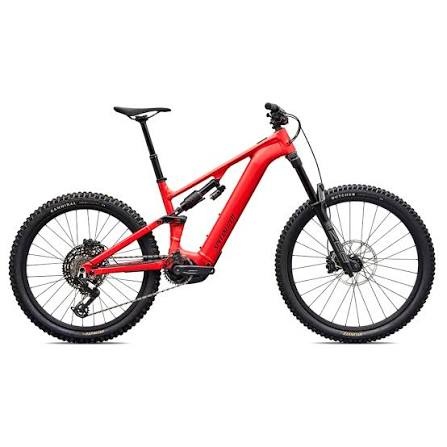
Battery: 840Wh
Fast charger: 700W / 12A
Claimed 0–80% time: Under 1 hour
Category: Electric mountain bike
The Specialized Turbo Levo 4 is one of the clearest examples of genuine rapid e-bike charging in the current market.
Its 840Wh battery is large enough for demanding trail riding, yet the optional 3.1 Smart Charger can replenish it from zero to 80% in under an hour.
Specialized offers multiple charging modes, including Fast, Eco, and Battery Life modes. That is particularly useful because you don’t necessarily need maximum charging speed every time.
Why it stands out
- 840Wh battery
- 700W charging power
- Up to 12A charging current
- 0–80% in under an hour
- Multiple charging modes
- Designed specifically for the Turbo Levo 4’s 3.1 system
This makes the Levo 4 particularly attractive to mountain bikers who want to complete a long ride, recharge during a break, and head back onto the trail.
Best for: Trail riders, e-MTB enthusiasts, and riders who need a large battery with genuinely rapid charging.
2. Yamaha Civante — Best Road E-Bike for Quick Charging
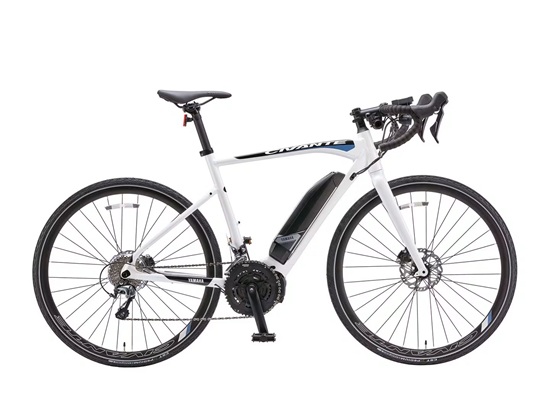
Battery: 500Wh
Charger: Yamaha high-speed charger
Claimed 0–80% time: About 1 hour
Category: Class 3 road e-bike
The Yamaha Civante is an older design compared with the newest Turbo Levo 4, but it remains an important example of fast e-bike charging.
Yamaha states that its high-speed charger can take the Civante’s 500Wh battery from 0% to 80% in approximately one hour. The battery can be charged either on or off the bicycle.
The Civante also features a Yamaha PWSeries SE center-mounted motor with up to 70Nm of torque and Class 3 assistance up to 28 mph in its U.S. specification.
Why it matters
A 500Wh battery isn’t particularly small, so reaching 80% in approximately an hour makes the Civante especially interesting for riders who need a quick turnaround.
Best for: Road riders, commuters, fitness cyclists, and anyone who values rapid top-ups.
Quick Charging E-Bike Comparison
| E-Bike | Battery | Charger | Claimed Charging |
|---|---|---|---|
| Specialized Turbo Levo 4 | 840Wh | 700W / 12A | 0–80% under 1 hour |
| Yamaha Civante | 500Wh | Yamaha High-Speed | 0–80% about 1 hour |
| Bosch Smart System examples | Up to 800Wh | 4A standard* | 50% in ~2.6h for 800Wh |
| Shimano STEPS examples | 504Wh | EC-8004 | 0–80% about 2.5h |
*Bosch charging times vary by charger and battery. Bosch’s current published figures show an 800Wh PowerTube taking about 2.6 hours to reach 50% with a 4A charger and about 6.9 hours to reach 100%.
This comparison highlights an important point: not every “fast charger” qualifies as one-hour charging.
How Does E-Bike Fast-Charge Technology Work?
Fast charging isn’t simply a matter of increasing the amperage.
The battery contains a battery management system (BMS) that monitors important parameters such as:
- Cell voltage
- Current
- Temperature
- State of charge
- Charging limits
The charger and battery system work together to determine how much power can safely enter the battery at a particular point in the charging cycle.
This is why a charger rated at 700W doesn’t necessarily deliver 700W continuously from 0% to 100%.
As the battery approaches a high state of charge, charging generally slows down.
Why 0–80% Is Much Faster Than 80–100%
This is one of the most important things to understand about e-bike charging time comparison.
The first portion of a lithium-ion battery’s charging cycle can accept relatively high power. Near the top of the charge, the system reduces current to manage voltage and heat.
That’s why manufacturers usually advertise fast-charging performance as:
0–80%
rather than:
0–100%.
The difference can be substantial.
For example, Bosch’s published charging figures for its Smart System show a PowerTube 800 taking approximately 2.6 hours to 50% and 6.9 hours to 100% with a 4A charger.
So if you need enough energy for another ride, stopping at 80% may be much more time-efficient than waiting for a complete charge.
Rapid Charger vs Standard E-Bike Charger
The difference between a rapid charger and standard charger isn’t just marketing.
Standard charger
Typically:
- Lower power
- Longer charging time
- Smaller and sometimes lighter
- Better suited to overnight charging
- Often included with the bike
Rapid charger
Usually:
- Higher current
- Higher power
- Shorter charging time
- More useful for riders doing multiple rides per day
- Often sold as a premium accessory
- May require a compatible battery and charging system
For example, Bosch publishes separate charging times depending on battery and charger configuration and notes that charging can be reduced with its Fast Charger.
The key word is compatible.
You cannot safely turn an ordinary e-bike into a rapid-charging bike simply by purchasing a high-powered charger.
What Is an E-Bike Proprietary Fast Charger?
An e-bike proprietary fast charger is designed specifically for a manufacturer’s battery and electrical system.
This can involve:
- A proprietary connector
- Specific voltage requirements
- Current limits
- Communication between charger and battery
- Battery-temperature monitoring
- Software-controlled charging profiles
The Specialized 3.1 Smart Charger is a good example. Its 700W/12A output is specifically designed for the 3.1 full-power system used by the Turbo Levo 4.
This is one reason you should never assume that a charger with the right plug will work safely with another e-bike.
Does Fast Charging Damage an E-Bike Battery?
It can increase battery stress, but a manufacturer-approved fast-charging system is designed to manage that stress.
Lithium-ion batteries are affected by factors such as temperature, charging rate, voltage, and usage patterns. Research from the National Laboratory of the Rockies notes that high-current fast charging can increase heat generation and potentially affect battery life, making thermal management important.
More recent battery research also identifies mechanisms such as lithium plating, impedance growth, and thermal stress as challenges associated with increasingly aggressive fast charging.
That doesn’t mean fast charging automatically destroys an e-bike battery.
Modern systems can use:
- Temperature monitoring
- Current regulation
- Charging curves
- Battery-management software
- Reduced charging power at high state of charge
- Multiple charging modes
Specialized, for example, specifically provides an Eco mode and a battery-life preservation function on its 3.1 Smart Charger rather than forcing riders to use maximum charging power all the time.
How to Maximize Battery Life When Fast Charging
If you own a rapid-charge e-bike, you don’t necessarily need to use maximum charging speed every time.
1. Use fast charging when you actually need it
If you’re charging overnight, there is little reason to prioritize the fastest possible charging rate.
Use rapid charging when:
- You have another ride soon
- You’re traveling
- You’re on a multi-day cycling trip
- You’re doing multiple rides in one day
- You need a quick emergency top-up
2. Keep the battery at a reasonable temperature
Heat is a major concern for lithium-ion batteries.
Avoid charging immediately after an extremely hard ride if the battery is unusually hot. Let it cool according to the manufacturer’s instructions.
Likewise, don’t charge a battery in direct sunlight or in a very hot environment.
3. Use the manufacturer’s charger
Electrical Safety First recommends using the original charger or obtaining a replacement from the manufacturer, and it warns against charging batteries near combustible materials or in excessive heat.
4. Don’t modify the charging system
Never try to increase charging current by modifying:
- The charger
- Wiring
- Connectors
- Battery
- BMS
The battery, charger, and BMS are designed as a system.
Can You Charge an E-Bike to 80% in One Hour?
Yes—but only with a compatible battery and charging system designed for that level of power.
Two strong examples are:
Specialized Turbo Levo 4
Its 840Wh battery can reach 80% in under an hour with the 700W 3.1 Smart Charger, according to Specialized.
Yamaha Civante
Yamaha says its 500Wh battery reaches 80% in approximately one hour using the company’s high-speed charger.
However, you shouldn’t expect a typical 500–800Wh e-bike with a standard 2A or 4A charger to deliver the same result.
Why Most E-Bikes Still Don’t Charge in One Hour
If rapid charging is possible, why isn’t every e-bike equipped with it?
There are several reasons.
Cost
High-power chargers and compatible battery systems can increase the price of the bike.
Heat
Higher charging power creates additional thermal-management challenges.
Battery longevity
Manufacturers have to balance charging speed with long-term battery durability.
Electrical design
The battery cells, BMS, charger, connectors, wiring, and charging port must all support the required current.
Real-world demand
Many riders simply don’t need one-hour charging.
If your daily ride consumes only 30% of the battery and you can charge overnight, paying extra for extreme charging speed may provide little practical benefit.
Best E-Bikes for Quick Charging: Who Needs Them?
Fast charging is particularly useful for certain riders.
Delivery riders
Food and package delivery riders can spend many hours on the road.
For these users, a one-hour charging window can be much more valuable than it is for a recreational cyclist.
E-MTB riders
A rider can complete a morning trail session, recharge during lunch, and head back out in the afternoon.
This is exactly the type of use case Specialized’s Turbo Levo 4 rapid charging system targets.
Long-distance commuters
If your commute consumes a significant percentage of the battery every day, rapid charging can reduce downtime.
Tourers
Fast charging can be helpful during café or restaurant stops when electrical access is available.
When Fast Charging Doesn’t Matter
On the other hand, you may not need a rapid charger if you:
- Ride less than 20–30 miles per day
- Have access to overnight charging
- Have a large battery relative to your daily usage
- Don’t ride multiple times per day
- Rarely travel long distances
For these riders, battery capacity and reliability may be more important than charging speed.
E-Bike Charging Time: What Should You Compare?
Don’t compare bikes based only on the phrase “fast charger.”
Instead, look at these seven specifications:
- Battery capacity in Wh
- Charger output in watts
- Charger current in amps
- 0–50% charging time
- 0–80% charging time
- 0–100% charging time
- Whether the charger is included
This prevents misleading comparisons.
A manufacturer advertising “fast charging” might mean 50% in an hour, while another might mean 80% in an hour.
Those are very different experiences.
Practical Fast-Charging Tips
If you’re shopping for an e-bike with rapid charging, use this checklist:
- Check the actual charging percentage. Is the claim 0–80% or 0–100%?
- Check battery capacity. One hour to 80% of 500Wh is very different from one hour to 80% of 840Wh.
- Check whether the fast charger is included.
- Check charger compatibility.
- Look for temperature-management features.
- Compare standard and fast charging modes.
- Check replacement charger availability in your country.
- Don’t use third-party high-power chargers unless the manufacturer explicitly approves them.
- Consider whether you actually need rapid charging.
The Future of Fast E-Bike Charging
Fast charging is likely to become increasingly important as e-bike batteries grow larger.
A 500Wh battery can already provide useful range for many riders. But modern high-power e-MTBs can use batteries approaching or exceeding 800Wh, making charging speed increasingly relevant.
The technology challenge isn’t simply putting more electricity into the battery.
Future systems need to improve:
- Cell chemistry
- Thermal management
- Battery-management software
- Charging efficiency
- Cell durability
- Charger size
- Safety controls
Research into next-generation batteries is already focusing on materials, electrolytes, thermal management, and charging protocols to enable faster charging without unacceptable degradation.
That means the next generation of fast-charging e-bike battery technology in 2026 may be defined as much by intelligent battery management as by bigger chargers.
Final Verdict: Are Fast-Charging E-Bikes Worth It?
For the right rider, absolutely.
The Specialized Turbo Levo 4 currently represents one of the most impressive production examples, with its 840Wh battery capable of reaching 80% in under an hour using the 700W 3.1 Smart Charger.
The Yamaha Civante is another noteworthy example, with Yamaha claiming approximately one hour for a 0–80% charge of its 500Wh battery using the high-speed charger.
But fast charging shouldn’t be your only buying criterion.
A good e-bike should also have the right:
- Battery capacity
- Motor performance
- Range
- Brakes
- Frame design
- Riding position
- Reliability
- Service support
- Charger availability
Most importantly, don’t confuse fast charging with universally better charging. If you charge overnight, a standard charger may be perfectly adequate. If you’re a delivery rider, trail rider, tourer, or long-distance commuter who needs several rides per day, rapid charging can be a major advantage.
The future of e-bike charging is clearly moving toward shorter downtime. For riders who value their time, getting 80% charge in about an hour could be one of the most useful e-bike technologies to arrive in the modern market.
One thought on “Fastest Charging E-Bikes: 0–80% In 1 Hour”